Contents

Showing posts with label Buenos Aires. Show all posts

Monday, October 16, 2006

Argentina General Information

Country Fact Sheet:

Full country name: Republica Argentina
Area: 2,776,890 sq km (1,083,000 sq mi)
Population: 38,740,807(July 2003 est.)
Capital city: Buenos Aires
Language: American Spanish
Government: Republic
President: Nestor Kirchner
People:
86% European descent
15% Mestizo
1% Indian and other minorities
Religion:
93% Roman Catholic
2.5% Protestant
2% Jewish
1.5% Ukrainian Catholic
1% Armenian Orthodox

GDP per capita: $10,423.11 USD

Currency: ARS - Argentinean Peso
Exchange Rate: 2.89 Argentinean Pesos per 1 US Dollar (as of 05/15/05)
Note: In Argentina, the $ symbol represents an amount in Argentinean Pesos. Rarely, in goods sold only to foreigners, you will encounter a price in USD which will be represented by u$s or us$.

Exchange Rate Calculator:
Look up the latest exchange rate using a simple-to-use calculator on this website.

Buenos Aires:
Population: 12 million
Abbreviations: A commonly used abbreviation for Buenos Aires is BA, sometimes also written as BsAs.

Sunday, October 15, 2006

Photos from Buenos Aires


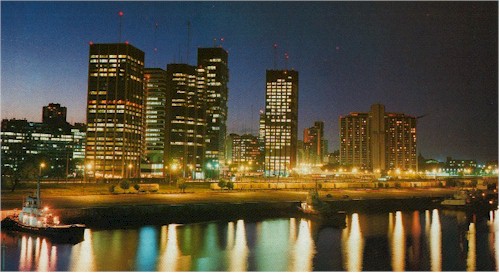
Buenos Aires view from The River


Sarmiento st.


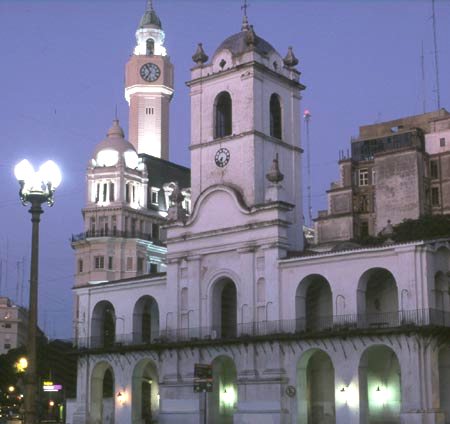
The original Town Hall, now a days is a museum


9 de Julio Av.


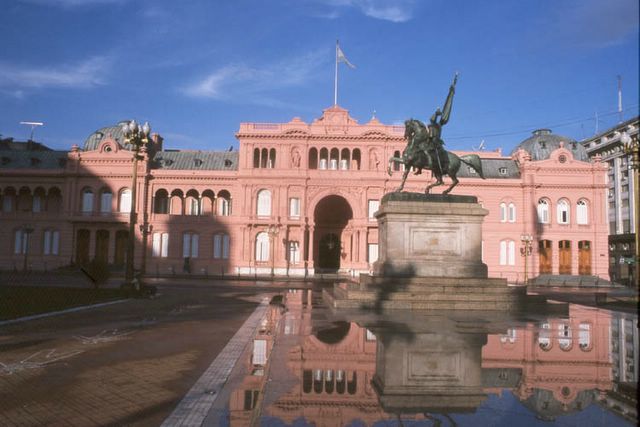
Casa Rosada, Casa de Gobierno
(The Pink House)


T
he Cogress


Avenida de Mayo


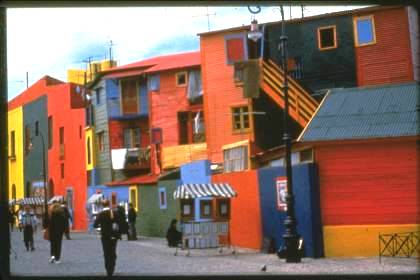
Caminito, La Boca


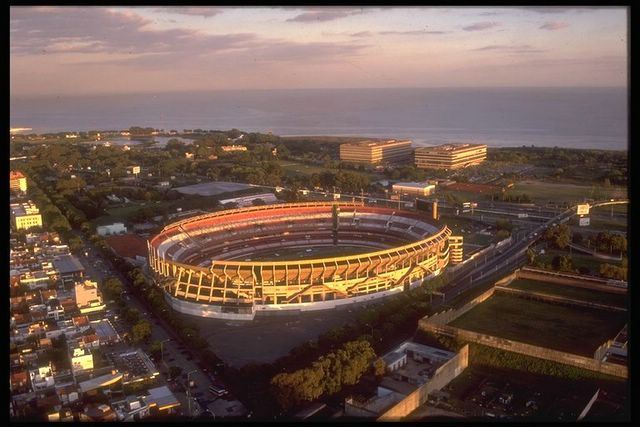
Estadio el MONUMENTAL
(StadiumThe Monumental)


Colón Av.


Planetarium


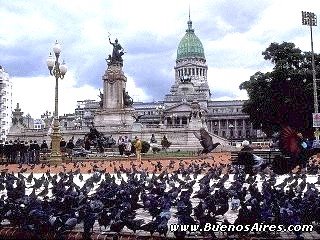
The Congress


Old building, new building


Traffic in the 9 de Julio Av.


9 de Julio Av. (9th of July Av.)
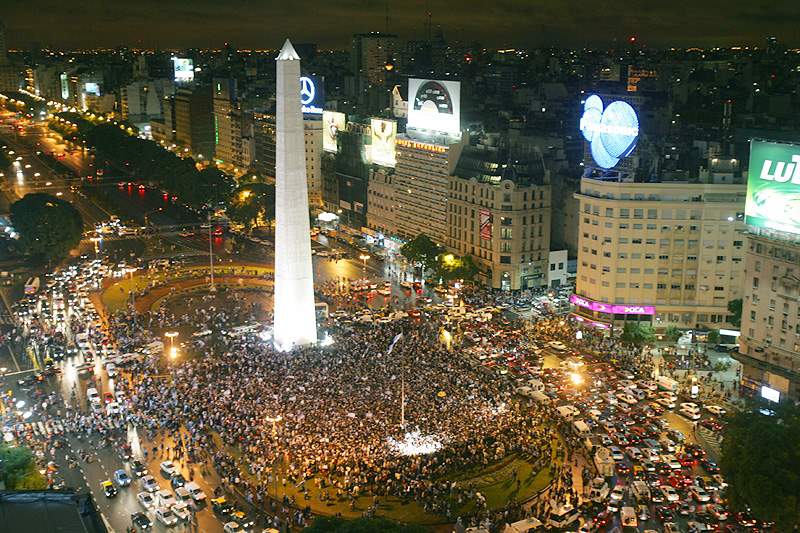
Lots of people at the Obelisc

Wednesday, October 11, 2006

BUENOS AIRES SAFETY TIPS


These tips courtesy Alberto Gesualdi, who writes:

Keith, almost one year elapsed since my comments on safety in Buenos Aires. Some things have changed, some remains.

Now this is Buenos Aires in September, 2004:


Parity of Argentine peso with USD is 3 to 1. Euro currency parity is 3.6 to 1.

Things are still cheap if you come with US dollars/Euro therefore. However, some owners of rooms for rent abuse visitors, asking fees in US dollars that are not related to the quality of service they give. It is advisable to make reservations of rooms or apartments through some friend in Buenos Aires. Prices given are different if the person calling is a native or a visitor. There is a hotel near where I work at Chacarita neighbourhood that costs USD 22 for a single room, air conditioned, TV and breakfast. Anything higher than 25 dollars per night (not being an international hotel) is abusive.

* Downtown area known as "microcentro" is still a place where demonstrators make protests. Almost every working day there are marching columns. The best way to keep out is to use the subway. Local government changed their policy from a laissez faire attitude to a careful watch with police forces, unarmed but preventing dangerous situations with barricades and street patrolling.

* Milongas are safe inside, but is advisable to arrange for a taxi cab and/or remise cab to pick you up when leaving. Fares have to be discussed thoroughly - sometimes the taxi drivers make better prices than the remises. Make very clear that you need to be taken from a suburban milonga to downtown, if you go to that places, since now there are severe controls of all the access to the city from the suburbs, and not all the taxi drivers and/or remise drivers have their papers in order. If you are going to stay with friends at the suburbs after the suburb milonga ends, is not a problem. The problem is to return to the city by the access at night or at daylight, due to this police controls. A reasonable fare for a taxi cab/remise within Buenos Aires is from 10 to 15 argentine pesos. For suburban areas it depend on the place of destination, but you may consider an average fare of ARp 0.90 per kilometer. Some suburban milongas ( Avellaneda, Vicente Lopez ) are nearer Buenos Aires than others (Lomas de Zamora, Lanus, San Miguel). Radio taxis are the actual nightmare, they are everywhere, and they keep their radios plugged even when taking a passenger. It would be better to arrange beforehand with a reliable company, to pick you up at your house to the milonga and viceversa. Make very clear you do not want the driver to smoke, there are smoking cabs and non smoking cabs, and the drivers may take in not a friendly way your suggestion to drop their cigarette when you are inside.

*Now it is almost springtime in Buenos Aires, and there are mild temperatures, with some unexpected showers; bring some umbrella and warm clothes just in case the weather changes to cold for a couple of days. Milongas are reasonable conditioned, but the big trouble is still the smoke. Try to obtain a table where you can have some fresh air. The best places are near the entrance or the rest rooms or kitchen area, where some fresh air came. In the middle of the dancing floor and the nearby area, sometimes you can see what you are breathing.

* Subways run until 10.30 pm, so for many evening milongas they are better than a taxi and/or remise, within the city. They are cheaper, the magnetic pass (one entry) costs ARP 0.70 (usd 0.30). There are also magnetic cards for 2 trips, 10 trips, and also plastic cards that can be replenished - they are cheaper. There is also a promotion for cinema (Hoyt chain) you can buy four tickets at the subway station at ARP 24 (usd 8. This is a 40% discount over the entrance price, and also you do not have to make the queue for the cinema, you go directy to a special booth to change your coupons for entrance tickets.

The argentine currency is now the peso only. There are fake notes, especially the 20,50,100 notes. Try to change your foreign currency at exchange houses or banks. Coins are the same, now there is a new coin of 2 pesos with the face of Eva Peron, it is not fake, but it has a limited circulation because it was issued some time ago as a limited edition.

Try to have change for the milongas, with argentine pesos notes of 2, 5 and 10. Sometimes the cashier at the milonga has no change for 50 and 100 notes, or is reluctant to give change. Check beforehand the cost of the entrance, some nights, when there is live show, the tickets are more expensive.

ATM's have improved. Now you can withdraw at weekends without problem. Anyway, try to withdraw from ATM at locations with a nearby security guard, or in daylight. It is not advisable to withdraw by night or at lonely places.

There are two neighbourhoods that have improved a lot, and are worth to have a look. Puerto Madero has new buildings, amenities, and also an Art Museum that has just opened. And Palermo Viejo neighbourhood has two sub areas, Palermo Soho and Palermo Hollywood. Palermo Soho has an impressive list of ethnic restaurants, art shops, cafes, and many other amenities. There are no less than 80 places in an area of 20 squares. A nice walk will be to start at Plaza Julio Cortazar (Borges and Honduras), and head to Plaza Palermo Viejo (Armenia and Guatemala). The area has a look like Greenwich Village on Manhattan, NY.

Warm regards
Alberto Gesualdi

Tuesday, October 10, 2006

The Radio Live

"La 2x4" FM 92.7, Live 24hrs.
click here to play.
"La Once Diez" AM 1110, Live 24hrs.
click here to play.
Radio Criolla, by Daniel Beller.
Click here to play.

Old Radio Broadcasts

The Radio in 1938,
Mercedes Simone and Roberto Firpo
"Jabón Federal" (1938), with
Mercedes Simone and Roberto Firpo.
Audio:

The Radio in 1954, Alberto Castillo in Cuba
CMQ Radio, Havana-Cuba (1954), with Alberto Castillo. Audio:

The Radio in 1957
LR3 Radio Belgrano, "Buenos Aires: la noche y el tango" (1957), with Florindo Sassone's orchestra. Audio:

The Radio in 1967
Radio Nacional, 10/5/67. A tribute to Firpo. Audio:

The Radio in 1967, "Glostora Tango Club"
"Glostora Tango Club", Radio El Mundo, 10/12/67. Audio:

The famous dancers

Glory and decline of "El Cachafaz" and "El Vasco" Aín

Unknown author, excerpted by Guillermo Bosovsky


It is a general opinion that El Cachafaz was the best tango dancer, even though others also achieved fame with so difficult artistry. He was nearly sixty in 1942 and he went on shining, as if wrinkles or white hair were unable to beat the boy who entered his glory in a dark yard, dancing at a contest of tango orillero (from the outskirts) and tango de salón (for dancing salons) for an exclusively male public. But he already was, at that time, a master who had learnt to very well assimilate the lessons of the early orilleros who created the tango dance. His nickname was owed to his mother, tired of his escapes and his street adventures. He was called EL CACHAFAZ to refer to the wanderings of his behavior, when on the Abasto corners (the neighborhood of Buenos Aires which knew of Gardel’s rise to singing) he flaunted by dancing to the beat of the barrel organs, or he went into the academias (dancing rooms) to test himself as a man or a dancer. But Benito Bianquet (this was his real name) (Todo Tango Director's Note: The "El Cachafaz"’s true name was Ovidio José Bianquet (see on this same section the article on "El Cachafaz" by Néstor Pinsón) was not born at el Abasto, but in south Barracas, an opposite neighborhood. However, he was always around el Abasto, and near this area he achieved his early honors.
Two dedicated tangos
He was certainly, then, the dancer from the outskirts. The dancer for the dense customers of the houses with bad reputation. But as his success was growing, as he was jumping from big yards to the most elegant places, he commenced to polish his technique and even to embellish his steps, amazing Hansen’s or El velódromo’s customers.
A tango from 1913, by Manuel Aróztegui, titled "El Cachafaz" (Todo Tango Director's Note: As for the tango "El Cachafaz" dedicated to the actor Florencio Parraviccini, this fact does not imply to deny the reason of its inspiration. Although for many people it has nothing to do with the dancer) helped to immortalize the name of the best tango dancer. Another tango, named "Bailarín compadrito" and sung by Gardel, was, on the other hand, inspired in his life. For example, it points out that his beginnings were in south Barracas. Even though the lyric is a double-edged tribute, because, in sum, it just throws in his face the fact of his passing from the outskirts world to the more elegant world of salons and high society circles. In fact, Bianquet started to polish more and more his style of dancing, erasing roughness and coarseness in step movement, showing an admirable choreographic capacity, and simultaneously he achieved wide prestige in the most renowned dancing centers (such as Los cabreros or El gran bonete). The result was that he finally had to teach the aristocratic ladies to dance tango at a downtown theater. He charged quite expensive fees for his lessons and all the elegant world in Buenos Aires (who, due to the boom of this music in Europe, had forgotten about his dark origins) was after him to be taught. This teaching is portrayed with a light sarcasm in the lyric aforementioned:
Cualquiera iba a decirte,
che reo de otros días,
que un día llegarías
a rey del cabaret
y pa enseñar tus cortes
pondrías academia...

Jump towards Europe
But the admission to the salons was what Bianquet needed to expand his fame to Europe. By 1920 he arrived in Paris and quickly succeeded. His creole elegance, his figure, his artistry more and more polished and at the same time more beautiful, opened for him the doors of every Parisian salon. This period coincides either with his fame or with his better financial fortune. Benito Bianquet got money in enormous amounts. But in the end, in spite of the salons and the full dress, he kept on being the same rascal who disquieted his mother when a teenager, so he sticked faithful to a disordered and hazardous existence. On his return from Europe only the memory of the money earned was left, as had happened before with the fortune he got in Buenos Aires. He had no other choice but to go on working, to go on living from day to day and depending on lucky strikes, which some day drove him to a theater stage and another day threw him into a low class cabaret.
Anyhow, those who saw him walking along Corrientes street in his late years, always erect, always ready to shine as at his best times, had no doubt that for Bianquet his life began and ended with dancing, with a tango well danced. His partner (Carmen Calderón) had helped to his glory and the dancing team they represented was really wonderful. In 1942 they were in Mar del Plata performing in a boîte, surrounded by the few friends who knew their old glories, when his death took place. It was a few minutes after finishing their show and at the time he was going for a drink to relieve himself of his fatigue. Outdoors, the young were singing boleros and were beginning to regard tango with indifference. Indoors, at the boîte, a man closed his eyes for good, maybe thinking that the lyrics dedicated to him one day, were not completely mistaken when they pointed out his hopeless old age. "ahora triste y viejo te ves en el espejo del loco cabaret" (now sad and old you look yourself on the mirror of the crazy cabaret). His friends had to collect eight hundred pesos to pay the funeral. Bianquet had no single coin on him.
El Vasco Aín story
Next to El Cachafaz, the name of Casimiro Aín also left a trail on the tango dancing history. When he left from Buenos Aires towards Europe, he was known as El Vasco, a nickname that reminded his ancestry.
But his fame had not Argentina as a stage but, especially, countries like France, Spain, Italy, where his art found renewed triumphs. It was him who danced tango for the Pope Benedict XV, for example. In reality, his odyssey in the Old World (which preceded Bianquet’s for more than four years) was decisive for this music to succeed outside. Aín meant the arrival of the first serious tango dancer. The first in introducing a greater artistic wealth to dancing. Until 1926, approximately, the artist kept his kingdom untouched, even though El cachafaz’s arrival could have meant an important challenge. But the ten or fifteen years which modelled his career in Europe had been enough to make him an unquestionable attraction in cabarets and elegant salons. So his artistic biography is written far from the tango homeland, and Casimiro Aín’s name succeeded to say more in Paris or in Rome than in the Argentine capital.
In 1927 El Vasco returned to Buenos Aires and almost disappeared from public light. The details of this late stage of his life are unknown, except the fact that he underwent a surgical operation on his leg, what later derived in amputation. As a bitter irony, fate was reserving this ending with crutches, which (for a talented dancer, for a man who had bet all his life and his dreams on his experience as dancer) meant a true deadly blow. A few months after the operation, he died. The causes of his death are unknown, although is easy to imagine the drama he was obliged to endure when seeing himself maimed and with no possible future chance. Destiny so defeated a major dancer, he was cornered into solitude and oblivion.
Other figures
Two names do not make the history of a dance which, already in the early times, found a marvelous generation of profligates (as Carlos Vega said) capable of creating choreographic movements of unequaled beauty. But out of the long list of dancers who contributed to create, to spread tango, they are the most important. Nevertheless, the nickname of El mocho reminds us of a certain Undarz who achieved fame at the cabaret Royal (Corrientes, near Carlos Pellegrini street, where later the Tabarís was placed); the stage put forward figures as popular and famous as Juan Carlos Herrera or Tito Lusiardo; Pardo Santillán himself, whose fame at Hansen’s was total up to the day when he went out to dance with his partner to show his artistry to El Cachafaz (who had just arrived at the local), and the latter defeated the former with his acrobatics on the dance floor. The prowess nearly derived into police chronicle, but a friend of Bianquet’s called El Paisanito infused a volcanic calm with his knife. They were alone and in spite of this they managed in getting the control of it. That is to say, El Cachafaz managed to go on dancing. He had defeated Santillán for good and all the dancers who came before or after him (See a more detailed story of this event in an excerpt from the book by García Jiménez (Todo Tango Director’s Note: on this same section, under the heading "Challenge for Dancers"). His name is already a definitive symbol of danced tango.
Narration without mentioning author, published on the magazine Hechos Mundiales Nº1, Editorial Zig-Zag, Director: Edwin Harrington. Buenos Aires, 22 August 1967.

Intimate celebration of the end of the year


hen the character is non-existent, you have to invent it and then the stories are no longer real to become "fiction". This is not our case.

José Pedro Aresi

Luckily, the Mesa de Café (table at the café) of "Todo Tango" has among the people who frequent the venue —since a long time before— a character in flesh and blood named Mario Bosco. He is from "El Abasto" and his nickname is Coco.

So it happened that our friend Bosco, like that Greek peasant who unearthed the goddess Venus from a wheatfield, exhumed the idea of having a meeting at the end of the year, in what he intimately calls: "A wine with a meal".

A simple announcement at the Mesa was enough so that many patrons were interested, promising to go to "Il Vero Arturito", the traditional venue for the encounters of these "buddies" that stick to the old rules that converge, are transmitted and felt... with Tango.

The evening had come. The night shadows were beginning to enrich the charms of the neighborhood. That quarter which was an inspiration for the poets and the cradle of a thrush (El Zorzal).

Our friendly reunion was about to begin and a breath of pleasure guided us towards the corner of San Luis and Jean Jaures. We knew that we were not going to be many, but we were sure of living an intimate time, almost solemn, as the one that corresponds to a meeting of devotees of the "King Tango".

So, one by one, we were arriving with a smile on our lips and our arms spread to blend them into our friends' bodies.

And that which we had been heralding was the least important, that is to say "the meal", became only the flavoring that loosened the tensions gathered during a working day, while the grape nectar relaxed the tongues of thirsty throats. But inevitably there was someone who preferred that strange mix of "coke concentrate" diluted in water with bubbles.

Coco del Abasto

In fact, we spent a wonderful time, that made many of us recall that first evening meal on May 16, 2002, when we met for the first time and the virtual friendship became real.

To enjoy a better comfort and be able to chat nicely we were seated at two tables, but totally united by the same feelings and approaching the big number of subjects that Tango allows. So all the names that forever will be engraved in the big history of "Gotán" (Tango –spelled backwards) were evoked in the different conversations.

Needless to say that seventeen souls were under the spell of the magic music that daily calls us and that, generously, brings us the gift of the eternal illusion of making us feel always the same, as if the years would never pass for us and naively ignore that that other being that once was in our dreams shall never again come to the date appointed.

There was also a special remembrance for each one of the friends who were not able to be present due to circumstantial reasons or distance and I think that —secretly— we all had a place to remember those who other times accompanied us and today Fate wants that they witness us from Heaven.

Osvaldo Serantes

Osvaldito Serantes, as affectionately we his "partners in the brotherhood" call him (sorry, Oscar), surprised us once more with a valuable and unexpected present. His wife Soledad collaborated by handpainting it . On this occasion Osvaldo gave us a Carlos Gardel's figure, with his recumbent "hat", carved in wood which besides its intrinsic value, materialized the elf that haunted our tables.

But not everything was alike, there was a new event. For the first time Ángel Yonadi sang "a capella" the lyrics of "Falsía", a song whose music belongs to Edmundo Rivero, with words of an "unknown author" but unfortunately he was only heard by those who were around him. And surely Ángel's style, the pitch of his voice and the thrill he conveyed with his saying are enough credits to join the group of singers that accompany us at the Mesa de Café of Todo Tango.

Nobody was willing to leave but the relentless clock and the tiredness of the waiters invited us to the final toast. So Osvaldito Serantes, Soledad, Zulema, Ernesto, Benedetti, Guada, Mario Pino, Carmen, Alberto Rasore, Oscar Scoccola (Arolas), Dobalo, Pinsón, Yonadi, Roberto Mancini (a living glory of the "Glostora Tango Club"), Coco Bosco, Ricardo Garcia Blaya and I raised our cups, renewing the wishes for happiness for all the people present and those friends unable to be with us this time.

To conclude, it's worthwhile to repeat a phrase said by one of the attendants: «I think this was the most friendly evening meal I went to».

When did tango went abroad?


t is widely thought that at the beginning of the twentieth century tango was a kind of music that was popular only in Buenos Aires. Furthermore, precisely and wrongly, people used to affirm that it was confined to the interior of the whorehouses or, to say the least, limited to the outskirsts. There is a lot of evidence that testimonies a wider popularity which covers the whole city and even the interior of the country. And maybe even more surprising is that from 1905 it was widely spread abroad.

In this work we shall refer especially to the recorded output, as means of diffusion of tango music. As for financial figures, at the turn of that century either the price of the records or the playing machines were expensive. It turns out eloquent about what characteristics had those who bought those products. It was evidently people with a buying capacity different from the needy, neither peripheral inhabitants nor outskirts dwellers.

But we won't focus on the sociological aspect but on the geographic and commercial side of the tango diffusion. We have to take into account that until around 1910 the main portion of the recorded material in the world had an international character, that is to say, was shared by the buyers of America and Europe. Then, they achieved larger catalogues than if otherwise they offered exclusively local repertoires. Furthermore, by that time the recorded sound still had, a strong component of technical magic, by which to a certain extent little mattered what was heard as long as you owned the miraculous device.

Within that context, in 1905 recordings of our native repertory were made in Paris and London. For that purpose national singers and monologue performers were sent. As for the instrumental aspect, the plan of recordings included, among other genres, tangos played by a group called Banda Real Militar. Let us compare these data with the sheetmusic of "La morocha" composed by Saborido which because it was written in the late 1905, it would have only reached Europe after a voyage on the Fragata Sarmiento in 1906. That is, approximately one year later.

So denoted the implicit circulation of printed tango music throughout the Old Continent during 1905, let us remember that those discs released by the Gramophone label belonged to the European international catalogue of that trademark. Besides, this company was associated to the North American Victor, then the aforementioned matrices were also pressed in the United States and distributed there and in the countries of Central and South America. Of course, through both labels those records reached their main destination, in other words, our country, due to their essentially Argentine-Uruguayan repertoire.

The abovementioned Banda Real Militar cut a curious matrix with two tangos. It was the 2.052e, on the one-sided disc Victor 3.009 and the two-sided disc 62.146-A with "Guido" and "La payada" composed by José Luis Roncallo. As well this band recorded the tango "Ay, chinita" whose author we don't know, matrix 2.084e, discs 3.014 (one-sided) and 62.151-A (two-sided).I repeat that these simple data, totally contradict those who say that tango had a limited presence, and linked it to infamous locals of the Buenos Aires outskirts.

Another case refers to the Columbia company. The discs manufactured in the USA had different series, but for our purpose we are interested in the "C" whose target was the Spanish-speaking market, in general, and the "T", exclusive of Argentina. For this enterprise in 1913 the Orquesta Típica Pacho recorded a tango entitled "Chile", released here as disc TX 766, matrix 57.227. But curiously it was also distributed in the Chilean territory with the international record label C 2.744. Even though it would have been sold only in Chile, see where and when genuine tango played by the famous Cuarteto Pacho was heard. Was that the only record of that orchestra sold there?

Pacho Quartet

Considering the wide spectrum of the concept Spanish-speaking, Pacho was not the only Argentine artist that appeared in the "C" series. And furthermore, take into account that the Central and South American countries of the Pacific coast were completely supplied by the ships that came from the north. Then, it would be possible the presence of Argentine repertory in Colombia, Ecuador and Peru in whose harbors ships stopped before reaching Chile.

We have another example. As in our country there were no factories until 1919, records were made in the United States (Columbia and Victor) and Germany (the rest of the numerous labels). Because of that, when World War I broke out the German industry devoted itself to war material and the flow to Argentine abruptly ceased. In order to correct this situation, the owners of those surviving local labels started negotiations with the two factories established in Brazil by then.

The most important of them was Odeon of Rio de Janeiro owned by Fred Figner. It began in the late 1914 and early 1915 to manufacture discs of that trademark with matrices cut here for the Argentine market. However, there are discs of the early 1920s with tango recordings by the orchestras led by Firpo and Canaro which were officially released in Brazil with the record label of Odeon of that country. Since when had it been happening? Were discs of other artists, for example, Gardel, simultaneously distributed in Brazil?

This double distribution can be seen as well in the other factory, based in Porto Alegre. Its owner was Saverio Leonetti, who pressed the matrices sent from Buenos Aires by the ERA and Atlanta labels for the Argentine and Uruguayan markets. But he also released them through his own labels in the southern area of Brazil. This operation, with which recordings of tango orchestras were even sold in Sao Paulo (and possibly in Rio de Janeiro), lasted approximately since 1915 to 1920.

Such activity, about which we ignore if it was consented by the Argentine impresarios and artists, was an important and unimagined diffusion in the Brazilian market. Let us say that it was a truly cultural penetration. An example, but absolutely unique, are the recordings of the tangos "Re fa si" and "Tierra negra" made by the Orquesta Típica Pacho in 1917. The disc released in our country with matrices 32 and 34, bore the disc number 2.016 of the local label ERA. Up to here, everything was all right. But furthermore Leonetti released those same matrices with the disc Nº 209 of his Brazilian label Phoenix, which according to data of its record label, in fact was even sold in Sao Paulo. Pay attention that at the same time that the famous "Re fa si" was premiered in Buenos Aires it was widely spread throughout the south of Brazil!

Because of that it should not be surprising that the Julio De Caro Orchestra was summoned to appear in Rio de Janeiro in 1927. It is generally thought that that aggregation originated the contact of the Brazilian audiences with tango. But on the contrary, they had been in contact with it through recordings since nearly fifteen years before! So De Caro did not travel to attempt to impose a musical genre but to satisfy a previous existing demand for tango. In sum, what is generaly regarded as a generating cause was in fact an effect.

Another case, also known that took place in Chile, is the proliferation in that country -at least since the mid- 1910s-, of "pirate" discs copied from original recordings. I can't precisely say how this parellel market was nurtured and prospered having originals from Victor, Odeon and Brunswick. Even though the names of the artists appear adulterated, or a laconic indication that they are sung by a "tenor" or performed by an "orchestra", artists of the aforementioned trade marks can be recognized. As a curiosity, the discs had on each side two different performers of the same label and even of two competitors.

Due to the number of copies that were included in the lots of second-hand records -about ten years ago-, we can estimate that at that time (from 1914 to 1930) the sales of those records were about a 20% of the material offered in Chile. And according to what was written on the record labels of some, those trademarks (there were several) would have been awarded at an exhibition in Bolivia. Then, remembering what was said about the coastal countries of the Pacific, and disregarding its illegality and where they were manufactured, we have to take into account this other unknown source of diffusion of our tango.

As a curiosity, the oldest pirate disc found by us corresponds to the original Victor 65.904-A, matrix B 14.285-1, with the tango "Alfredo y Juanito" by Celestino Ferrer, recorded by the Orquesta Argentina Loduca in USA, on January 7, 1914. Of course, in order to conceal the origin in the fake disc either the title and the name of the interpreter were distorted. But the disc number is still visible on the lacquer, like in many cases.

But it was not the only way by which Chile had a supply of Argentine recordings. Already by 1923 Victor records manufactured in the United States were coming to our country. Later when by the end of the decade the factories of Odeon began to be established -at the beginning as an exclusive activity of Max Glücksmann-, Victor and Brunswick, immediatately, started to release discs manufactured with Argentine matrices. Furthermore, there are recordings that only were published in Chile, as well as discs with recordings on the other side of the disc different to the ones known in Argentina. And I am talking about the orchestras led by Canaro, Firpo, Maffia, Brignolo, Típica Victor, the vocalists Charlo, Azucena Maizani, Alberto Gómez, Ruiz-Acuña, Rosita Quiroga, Agustín Magaldi, etc. What a diffusion of tango outside our country!

Orquesta de Canaro

To add more about this, a catalogue of the early 1930s announces the sale of records of different Argentine tango orchestras. Because it was a periodical publication with previous issues, we can guess that that kind of recordings were sold since around 1926. Where was the shop that sold them? Naturally, in La Paz, Bolivia. Genuine Argentine tangos by orchestras like those of Canaro, Firpo, De Caro or Maffia were sold in Bolivia at least since 1926. Even though the labels advertised were Odeon and Brunswick, by the above said reasons, it is possible that the catalogue of Victor was also commercialized.

Based on this panorama, we can say that the films of Gardel were not made to generate a market but, on the contrary, to satisfy the already existing demand. It turns out logical that after some years of hearing discs by the singer and with the arrival of sound movies, the Spanish-speaking audiences would have liked also to enjoy his image. Hence, the decision of shooting such films. As in the case of the trip of Julio De Caro to Brazil, the alleged cause was, in fact, a consequence of the previous popularity achieved through records. Whether it be of an interpreter, in particular, or of tango as a generic musical expression.

If what was said contradicts those who like to confine tango to locals of bad reputation, or to the mythical corner of Suárez and Necochea, or only to Buenos Aires, or only to our country, well, luckily... it was not that way!

Malena's hands


Roberto Palmer
oberto Palmer, who was for over thirty years the lead voice of the folk group Los Cantores de Quilla Huasi, lived with his wife Elsa at the apartment that Elena Tortolero (not Torterolo as I have read in a book) owned on Maipú 746, ground floor, apartment "A", in Buenos Aires. The one who had been singer and, according to most people, inspirer of the tango "Malena", already widow of the late Genaro Salinas and with two children, Concepción and Genarito, was forced to rent part of her house in order to survive.

Palmer was then member of the Trío Azul, and Elena (Roberto thinks that her name was María Elena) was their agent. When the room was vacant the singer and his wife moved to the building on Maipú Street.

About this subject I have talked on several occasions to him and due to the articles I recently read in Todo Tango, I suggested its director, Ricardo García Blaya, to publish this testimony on these pages. Based in Spain for several years -his days are spent between Madrid and Jaén-, he goes on singing and composing. I can assure you that his voice keeps the strength and freshness as its main features. A folk singer and also a truly tango man -he has composed several tangos- he treasures pleasant memories of that period of his life.

Elena Tortolero, "Malena"

We are talking about the late fifties. Roberto recalls that in 1959 he used to sing as soloist at "Le Mans", a venue owned by the speaker Jorge Ruanova, where the main attraction was the pianist Lucio Demare. The composer of "Malena" confirmed to him that Elena Tortolero was the woman who inspired Homero Manzi to write that lyric. When Palmer told Elena that Demare was playing at that venue, she asked him to take her there to say hello to the maestro. And so it was. The encounter was very touching. Surely some photographer might have immortalized that moment.

Elena Tortolero died in Montevideo and then Elsa, Roberto's wife, and Genarito went to the neighboring country to bring back the remains of the female singer and bury her near her husband at the Artists' Pantheon. Palmer told me that by that time he was performing in Chile. One day in Córdoba he told this story to the poet Néstor César Miguens. «Something that impressed him was when I made a comment about the charm of Malena's hands». And out of that encounter a beautiful number entitled "Las manos de Malena" was born. Miguens wrote the poem and Palmer added the music. Let's remember it.

Malena's hands

I remember you at a time of street-lights on the corner of the street,
a time that reunited livery stables and grocery stores
and the neighborhood boasted a wisteria scent
and autumn lit its moon with kerosene.

Later came your teen years to your merry dark hair,
the hallucinating samba and the stubborn tango there,
the school yard in a Buenos Aires not yet old
and that ardent Brazil with tobacco and alcohol.

Malena,
I learned your story through your speaking hands,
on your hands born to make love warm,
your hands that laughed, your hands that wept
with a white message like a dove and a flower

I learned that life hurts because of your hands,
your hands that used to sing deeper than your voice.
I learned that dreams hurt like a thorn
when you waved your white handkerchief to say goodbye.

“Atlanta” Records 1913-1917


Discos Atlanta
Alfredo Améndola

he “Atlanta” records, today truly testimonial documents, meant at their time, the shelter of sounds most plentiful of interpreters and authors of our tango as well as of a national folk repertory. The above-mentioned enterprise was the idea of an Italian named Alfredo Améndola who settled in Argentina when he was very young. He was a musician, interpreter of our national cultural values and of the most varied musical genres.

This idea would lead him to attempt to found in Buenos Aires an entirely Argentine recording company in which, if it were possible, any artist willing to cut discs with megaphones had the chance to make his dreams come true.

With this determination he traveled to Germany in the mid- 1912. There he came to an agreement with a record company, buying a recording machine and getting the license to sell the records with the trademark "Atlanta", whose name Améndola registered in Buenos Aires. He also hired a German technician who later would be the person in charge of making all the wax takes from the early 1913 to the late 1915. These waxes (master discs) made by a “direct cut” recording, -through an acoustical simple procedure-, were neatly packed in plushy boxes and were sent by ship to the port of Hamburg and from there to the factory that made the matrices and the pressing. Those were double-side 10-inch discs and were labeled with an individual cover with a Spanish text. They were sold for 2,50 pesos in Buenos Aires.

Discos Atlanta

The Améndola y Cía. House and “Atlanta” records are known by the public on a Monday (March 31, 1913) when the salesroom on 274 Esmeralda Street was opened in front of the then Teatro San Martín. There at the back of the local there was a small shed where the first recordings of the label were cut. These were its early groups: the Rondalla Vázquez, the Rondalla Atlanta (led by Arturo De Bassi), the Tano Genaro Quintet, the Rondalla Firpo, the Quinteto Garrote (led by Vicente Greco), the Quinteto Augusto (fronted by Berto), the Prudencio Aragón’s Rondalla, the Bevilacqua’s Rondalla, the Banda Atlanta, the concert guitarist Agustín Barrios, the Quinteto El Alemán (headed by Arturo Bernstein) and the Quinteto Carelli.

Discos Atlanta

One year later they moved to a larger local located on 350 Callao Avenue. The above-mentioned kept on recording and new ones were added: the Banda Municipal, the Orchestra of the Teatro Colón (conducted by José Strigelli), the violinist Ferruccio Cattelani and Augusto Maurage, the actor Eugenio Gerardo López, Blanca Podestá with Alberto Ballerini; also actors like the great jester of the period, Florencio Parravicini; the singer Saúl Salinas with Augusto De Giuli and Villoldo; Ángel Greco, José Betinotti, Juan Sarcione, Arturo Calderilla, Alfredo Gobbi Sr.; José M. Silva, an itinerant singer; Astor Bolognini and others not so renowned.

The beginning of World War I made Améndola interrupt his trade with Germany. He then traveled to Porto Alegre to meet with the Italian Saverio Leonetti, owner of a record factory. They signed an agreement and found that the fastest way to send recorded waxes was by railway to the border and from there by car. Some musicians such as Astor Bolognini and Francisco Canaro traveled themselves to record in that city of Brazil.

The Améndola’s enterprise achieved an important financial position due to the quality of the material that sold to its customers. But the long duration of the war soon had effects on the world economy and the crisis reached the South American countries. Améndola’s company began to decline and the final blow was given by a torpedo that caused the wreckage of the German ship that carried a large shipment of “Atlanta” records.

Discos Atlanta

In order to pay his obligations, Améndola had to sell at an auction all his buildings, goods and even the recording machine. But he left for us the “eternal singing” of voices and instruments transferred to wax and which, still today, we can enjoy to know the style of interpretation of those men that were born with the advent of our tango.