Contents

Showing posts with label Poets. Show all posts

Tuesday, October 10, 2006

The Radio Live

"La 2x4" FM 92.7, Live 24hrs.
click here to play.
"La Once Diez" AM 1110, Live 24hrs.
click here to play.
Radio Criolla, by Daniel Beller.
Click here to play.

Always Tango, radio file

"Always tango" radio file
Conductor:
Néstor Pinsón
Production:
Ricardo García Blaya
Editors:
Héctor Lucci
Bruno Cespi
Julio Nudler
Pablo Taboada
Communication:
Federico García Blaya
Broadcasting Date
Audio
13/11/1999 (New!)
04/12/1999
30/10/1999
17/07/1999

Thursday, September 28, 2006

Books about Tango

ABRAZOS books is a publishing house with headquarters in Germany. Its objective is to promote Latin American literature - with a special emphasis on Argentinean culture - and to make it accessible to readers all over the world. In a process of steady expansion, ABRAZOS books is presenting a series on tango music and the teaching of tango as well as about Argentina. This collection has published titles in German, English, Italian, Spanish and French, while more titles in the mentioned languages are being prepared.
If culture constitutes the lifestyle of a people, the book is the natural means to communicate such a given culture to the other cultures, and thus be the bond, the necessary link between the present and past generations and those to come.
Jorge Luis Borges once said, "I pretend that I am not blind and keep on bringing books into my house. Although I fail to see those books I can feel their friendly gravitation all around me". It is precisely that friendship of books and the magical world of their authors what ABRAZOS books intends to pass on to its readers.

Wednesday, September 27, 2006

Music Sheets

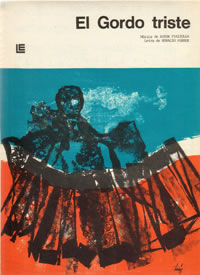
El Gordo triste
Tango
Lyric: Horacio Ferrer
Music sheet: Astor Piazzolla


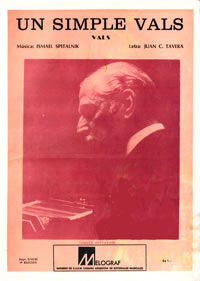
Un simple vals
Vals
Lyric: Juanca Tavera
Music sheet: Ismael Spitalnik


Un cacho de Buenos Aires
Tango
Lyric: Ángel Di Rosa
Music sheet: Víctor D'Amario y Aurelio Tallarico


Y le canto a mi ciudad
Tango
Lyric: Juan Luis Ricardi
Music sheet: Luciano Leocata y Sebastián Leocata


La yunta brava
Tango
Music sheet and Lyric: Antonio Polito


"Solo Tango" TV Channel on line

SOLO TANGO TV Channel on line

Videos
Performances
Tango lessons

Programmes
Buenos Aires
Singers
Tango History

Tuesday, September 26, 2006

Lunfardo - Argentinian Slang

Lunfardo was a colorful, slangy argot of the Spanish language which developed at the end of the 19th century and beginning of the 20th century in the lower classes in and around Buenos Aires.

Many Lunfardo expressions have entered into the popular language and have become an integral part of the Spanish spoken in Argentina and Uruguay. A few have been recognized even by the Real Academia Española. Lunfardo is frequently found in the lyrics of tangos, supplying nuances and double-entendres with overtones of sex, drugs, and the criminal underworld.

Much of Lunfardo arrived with European immigrants, such as Italians, French, Portuguese, and Poles. It should be noted that Italian immigrants spoke their regional dialects and not standard Italian; other words arrived from the pampa by means of the gauchos; a small number originated in Argentina's black population.

Most sources believe that Lunfardo originated in jails, as a prisoner-only argot. Circa 1900, the word lunfardo itself (originally a deformation of lombardo in several Italian dialects) was used to mean "outlaw".

Lunfardo words are inserted in the normal flow of Rioplatense Spanish sentences. Thus, a Mexican reading tango lyrics will need, at most, the translation of a discrete set of words, and not a grammar guide.

Tango lyrics use lunfardo sparsely, but some songs (such as El Ciruja, or most lyrics by Celedonio Flores) employ lunfardo heavily. "Milonga Lunfarda" by Edmundo Rivero is an instructive and entertaining primer on lunfardo usage.

A characteristic of lunfardo is its use of wordplay, notably vesre (reversing the syllables). Thus, tango becomes gotán and café con leche (latte, café au lait) becomes feca con chele.

Lunfardo employs ingenious metaphors such as bobo ("dumb") for the heart, who "works all day long without being paid", or bufoso ("snorter") for pistol.

Finally, there are words that are derived from others in Spanish, such as the verb abarajar, which means to stop your opponent's blows with the blade of your knife and is related to the verb "barajar", which means to cut or shuffle a deck of cards.

  • Manyar - To know / to eat (from the Italian mangiare -to eat-)
  • Morfar - To eat (from French argot morfer -to eat-)
  • Laburar - To work (from Italian argot lavoro -work-)
  • Algo voy a cerebrar - I'll think something up (cerebrar from cerebro -brains-)
  • Chochamu - Young man (vesre for muchacho)
  • Gurí - Boy (from Guaraní -boy-) Feminine: gurisa - girl. Plural: gurises - kids
  • Garpar - to pay with money (vesre for "pagar" which means to pay)
  • Gomías - Friends (vesre for amigos)
  • Fiaca - laziness (from the Italian fiacco -weak-)
  • Engrupir - To fool someone (origin unknown, but also used in modern European Portuguese slang).
  • Junar - To look to / to know (from Caló junar -to hear-)

Since the 1970s, it is a matter of debate whether newer additions to the slang of Buenos Aires qualify as lunfardo. Traditionalists argue that lunfardo must have a link to the argot of the old underworld, to tango lyrics, or to racetrack slang. Others maintain that the colloquial language of Buenos Aires is lunfardo—by definition.

Some examples of modern talk:

  • Gomas (lit. tires) - woman's breasts
  • Maza (lit. mace or sledgehammer) - superb
  • Curtir (lit. to tan) - to be involved in
    • Curtir fierros can mean "to be into car mechanics" or "to be into firearms" (see Notes below)
  • Zafar - to barely get by (see Notes below)
  • Trucho - counterfeit, fake (see Notes below)

Many new terms had spread from specific areas of the dynamic Buenos Aires cultural scene: invented by screenwriters, used around the arts-and-crafts fair in Plaza Francia, culled from the vocabulary of psychoanalysis, or created by the lyricists of cumbia villera.

Only a very staunch conservative would deny lunfardo status to this verse from cumbia villera band Los Pibes Chorros ("The Thieving Boys"): "Al primero que se haga el ortiba / por pancho y careta le vamos a dar" (see Notes below).

NOTES

  • Zafar is actually a standard Spanish word (originally meaning to extricate oneself) that had fallen out of use and was restored to everyday Buenos Aires speech in the 1980s by students, with the meaning of "barely passing (an examination)".
  • Trucho is from old Spanish slang truchamán, which in turn derives from the Arabic turjeman ("translator", referring specifically to a person who accosts foreigners and lures them into tourist traps). There is also a folk etymology that derives this word from trucha (trout). Reference (Spanish)
  • Fierro is the Old Spanish form of hierro (iron). In Argentine parlance, it can mean a firearm or anything related to metals and mechanics, for example a racing car.
  • Ortiba is vesre for batidor ("informant" in lunfardo).

Lunfardo Dictionary (Argentinian Slang Dictionary)

Download the Lunfardo Dictionary from La Cueva de Krak Tango. (Only spanish version)

Tango Movies

List of Tango movies from 1912 to 1999.

Tangoed Lives (1999)
Three to Tango (1999)
Tango, the Obsession (1998)
Tiara Tango (1998)
Tango (1998)
Tango Lesson, The (1997)
Michael Kael in Katango (1997)
...aka Michael Kael contre la World News Company (1998) (France)
...aka Michael Kael vs. the World News Company (1997)
Malena es un nombre de tango (1996)
Asphalt Tango (1996)
Best of Tango, The (1996)
Tango (1996)
Russian Tango (1996)
Sátántangó (1994)
...aka Satan's Tango (1994)
...aka Satanstango (1994) (Germany)
Tangotango (1993)
Tango feroz: la leyenda de Tanguito (1993)
...aka Tango Feroz (1993)
...aka Tanguito (1993)
...aka Wild Tango (1993)
Augustitango (1993)
Tango (1993)
Tango Argentino (1992)
Letzte Tango in Wien, Der (1992)
Naked Tango (1990)
Tangospieler, Der (1990)
...aka Tango Player, The (1990)
Tango & Cash (1989)
Two to Tango (1988)
Tango Bar (1988)
Tango Bayle nuestro (1987)
...aka Tango, Our Dance (1987)
Tango blu (1987)
Tango du Midi (1987)
Tango nashego detstva (1985)
...aka Tango of Our Childhood (1985)
Blonder Tango (1985)
Tangos, l'exile de Gardel (1985)
...aka Tangos, el Exilio de Gardel (1985)
...aka Tangos, the Exile of Gardel (1985)
Tango im Bauch (1983)
Damskoye tango (1983)
...aka Ladies' Tango (1983)
Tango (1982)
Tango durch Deutschland (1981)
Spurs of Tango (1980)
Tango ptaka (1980)
...aka Bird's Tango (1980)
Último tango en Madrid, El (1975)
Primo tango a Roma - Storia d'amore e d'alchimia (1973)
Ultimo tango a Parigi (1973)
...aka Dernier Tango à Paris, Le (1973) (France)
...aka Last Tango in Paris (1973)
Bruna, formosa, cerca superdotato per tango a Milano (1973)
Ultimo tango a Zagarol (1973)
Matratzen-Tango (1973)
...aka Secrets of Naked Girls (1973) (UK)
Tango Argentino (1969)
Tango del viudo, El (1967)
Tango pro medveda (1966)
Matango (1963)
...aka Attack of the Mushroom People (1965) (USA: TV title)
...aka Curse of the Mushroom People (1963)
...aka Fungus of Terror (1963)
...aka Matango the Fungus of Terror (1963)
...aka Matango: Fungus of Terror (1963)
Mi último tango (1960)
Kriminaltango (1960)
Del cuplé al tango (1958)
Historia del tango, La (1949)
Vida es un tango, La (1939)
Tango Notturno (1937)
Tango (1936)
Tango Bar (1935)
Tango en Broadway, El (1934)
Torch Tango, A (1934)
Tango (1933)
Tango (1931)
Tango do amor (1931)
Tango für Dich, Ein (1930)
Tango Cavalier (1923)
Tango Dancers, The (1920)
Tango Tangles (1914)
...aka Charlie's Recreation (1914)
...aka Music Hall (1914)
Tango in Tuckerville (1914)
Kri Kri e il tango (1913)
Tango-Königin, Die (1913)
Max, professeur de tango (1912)
Onnen maa (1993)
...aka Tangoelokuva onnen maa (1993)

Carlos Gardel - The King of Tango

Known as El Zorzal Criollo, the songbird of Buenos Aires, Carlos Gardel is a legendary figure in Argentina. The charismatic French-born singer's career coincided with the development of that intrinsically Argentine cultural icon, the Tango, the music, song and dance of Buenos Aires' tenements - arrabales.

Carlos Gardel y el retrato de su madre Berthe GardesGardel began his career singing in bars and parties and in 1913 formed a duet with José Razzano (which would last until 1925), singing a wide variety of folk songs. Gardel made the music his own by inventing the Tango-song, with his 1917 hit Mi Noche Triste, (which sold a 100.000 copies) and was an instant popular hit in Latin American countries. Gardel toured Argentina, Uruguay, Chile, Brasil, Puerto Rico, Venezuela, Colombia and cities like Barcelona, Paris and New York. He sold 70.000 records in the first three months of a 1928 visit to Paris. During his short life, he recorded a total of 770 themes, including 514 tangos. Gardel's huge popularity as an interpreter of the melancholy ballads of the tango was confirmed in the 1920s and 30s in nightclubs and motion pictures. The Argentine elite overcame their aversion to the tango's humble origins and open sensuality only when the man and his music were already widely accepted in France and Spain. Radio performances and a film career extended this appeal.

Carlos Gardel was born on Dec. 11, 1890 in Toulouse, France (as Charles Romuald Gardes) to unknown father and Berthe Gardes (1865-1943) who brought him to Argentina at 27 months of age). Gardel's sky-rocketing career was cut short in 1935, when he lost his life in a plane crash in Medellin, Colombia on June 24, 1935. Hordes of people thronged to pay their respects as the singer's body made the journey traveling via Colombia, New York, Rio de Janeiro and Montevideo to his final resting place in La Chacarita cemetery, Buenos Aires with the multitude listening to his tango Silencio. Instantly immortal and preserved forever young, his enduring fame is measured by the oft-heard Argentine expression "Gardel sings better every day". Sixty eight after his death, a devoted following keeps the legend blazing, playing Gardel's music daily and placing a lit cigarette in the hand of the life-sized statue which graces his tomb and keeping his few films in circulation.


What is the Tango?

In those times the tangos were almost never sung. They were the Creole estilos and tonadas.

Then came the tango-song, sentimental or mischievous, suburban and colorful, with pains of absence, contradicting loves, bully's stab and the weeping of a deceived girl. The poets of the humble Buenos Aires flourished and in each neighborhood bandoneón was heard modulating tangos with themes from songs coming from all the ports. In the same crucible of races that fused the Buenos Aires man, the tango-song found its form, the pains of the boy of this land, that the wind took across the seas to move the restless girls of Paris or to enchant the blonde Anglo-Saxon millionairesses.

It is not enough to have the most melodious voice to intone a tango. No. In addition, it is necessary to feel it. One has to live in its spirit.

I live it, I feel it in the sweet glance of a beautiful and well-endowed woman who sees me drive by in my fast "voiturette"; I know that I am the tango when after leaving the racetrack the crowd of men follow me with their glances; I am not deceived when the tailor takes pains to make me his best suit or the saleswoman looks for the prettiest necktie for me. I know that the tribute is to the tango. I am for them the tango. And I like it, because I feel more like I belong here. Even though I intone a sweet French song, even though people listen to my beautiful notes of "Parlez moi D'Amour", I know that I am the singer of tangos who lends himself for other songs.
(
Gardel's comment for: Noticias Gráficas, Buenos Aires, Sept. 21, 1933).


"People do not understand what I do, they think that I make the money without doing anything.

And I do make it, it is certain; I make a lot, but work many hours of the day. So that they realize, this figure is enough: I get to record twenty songs each month. In addition to the recording, which in that form has to be almost daily, taking into account the instrumentation, the harmonization of guitars, the modifications that should always be introduced, so that the song and the instruments work well, and it will be visible what is my life; very pleasant, I cannot complain, only about the continuous work."
(Gardel's comment for: La Nación, Buenos Aires, June 30, 1929).

Carlos Gardel signature - July 31, 1934 - New York


According to SADAIC (Argentine Society of Writers and Music Composers), in 2006, 70 years after the death of Gardel and Lepera, their works will revert to public domain. This will include the scores from most of Gardel films.

According to his agent, Armando Defino, during 20 years, from 1915-1935, Gardel earned about 2.000.000 pesos. This is equivalent to $US 500.000, a fortune in those days. At the time of his death, only 70.000 pesos remained.


This information comes from the Gardel Web. You MUST visit this incredible site!!!


Tango Lyrics Translations

The Tango Lyrics Home Page in English and Spanish was created by Alberto Paz and Walter Kane. It is maintained by Alberto Paz to preserve, nurture, and advance the education, understanding and love of the Argentine Tango culture through its verses. We encourage you to enjoy it, use it, broadcast it (give us due credit, please) and contribute to it with requests, translations of your own, comments and suggestions.

Index of Lyrics from Tango Planet

Tuesday, September 19, 2006

Enrique Cadícamo

e was born in Luján, province of Buenos Aires. His first book of poems, “Canciones grises”, dates back to 1926. Although with Alighieri’s advocation and imbued with certain Verlaine-like melancholy it is not free from tango qualifications: «El Pigall ha quedado desierto y bostezando, / enmudeció la orquesta sus salmos compadrones, / las rameras cansadas se retiran pensando / en sus lechos helados como sus corazones» (The Pigalle has been left deserted and yawning. The orchestra muted its challenging psalms, the tired whores leave thinking of their beds cold as their hearts). Two other poem books, with a very different approach but with an identical literary preoccupation, would follow this one: “La luna del bajo fondo” (1940) and “Viento que lleva y trae” (1945). Furthermore Cadícamo has published a novel, “Café de camareras” (1969), and a book of memoirs, “El desconocido Juan Carlos Cobián” (1972).

«An everlasting boy —wrote León Benarós—, Cadícamo seems to live counter clockwise. He keeps his hair intact, of a pale blond color, that becomes square at the back of his neck and rather long in a juvenile fashion... He wears light-colored ties —once we saw him with one of a subtle yellow color— and his sports coats add him youth. He wants to forget about time because he knows that time —“that dark enemy that sucks our blood”, according to Baudelaire’s lines—, feeds on our illusions, on our life...» (Enrique Cadícamo, in Tanguera, nº 29, with no date).

The first Cadícamo’s tango was “Pompas de jabón” with music by Roberto Goyheneche. About it the specialist Jorge Favetto says: «Recorded by Gardel in Spain on December 27, 1925 with the sole accompaniment of the guitarist José Ricardo in the electric system because in that country that system was known months before it was used in Buenos Aires. It was the poet Enrique Cadícamo’s first tango that Gardel recorded and the beginning of his notable creations. Furthermore Enrique Cadícamo was the author of the last tango that Gardel recorded in Argentina before his last tour: the tango “Madame Ivonne”, recorded on November 6, 1933. Later on November 7, onboard the Conte Biancamano, he went to France and from there to New York. He arrived in the latter on December 22, 1933».

After this an uncountable number of tangos of different levels followed —at least 20 of them recorded by Gardel—. Even though their quality was not even, they were not completely anodyne or with bad taste. In the Cadícamo’s tango oeuvre we shall find pieces quite well constructed like “Che papusa, oí” and “Anclao en París” and others clearly weak like “Tu promesa” and “Al subir, al bajar”. However all his output is distinguished by a notable literary decorum. Some examples follow:

Compadrón” is a lyric written for a previous music by the pianist Luis Visca and was spread by Sofía Bozán who by that time was performing for a season in Rosario. “Che papusa, oí” dates back to 1927. Víctor Soliño recalls: «The first Alberto Vila’s record could not be a failure. However the possibilities of a boom diminished when Alberto said that, as homage to the ones responsible for this venture, his first disc had to be Athenian (he referred to the Troupe Ateniense of Montevideo). And he chose “Niño bien”.

«We were not convinced that “Niño bien” had the value or the drive that meant a significant contribution to the smash hit they aimed for. We thought it was necessary to strengthen it. Matos Rodríguez —another trouper of the early years— was definitively based in Buenos Aires. He was Athenian and was, also, the composer of “La cumparsita”. Wow! So we turned to him for help. “Che papusa, oí”, with lyric by Cadícamo was the lifejacket that fortunately fell among the waves that swayed our inquietudes and our fears.» (“Mis tangos y los atenienses”, Montevideo, 1967, pages 30 and 31).

The lyrics of “Anclao en París” was written by Cadícamo in Barcelona in 1931. He sent it to Carlos Gardel who by then was in Nice (in whose Casino he had made his debut on January 15 that year). Guillermo Barbieri, one of the guitarists of the singer, composed its music and Gardel recorded it soon later.

Tres esquinas” alludes to the crossing of Montes de Oca and Osvaldo Cruz Streets in the neighborhood of Barracas, and to the café called "Tres esquinas", later "Cabo Fels", located in that place. The lyric was written by Cadícamo in 1940 for a previous music composed by Ángel D’Agostino (that of the unpublished tango entitled “Pobre piba”). It was premiered that year by Ángel Vargas who sang with the D’Agostino Orchestra.

Other interesting tangos are: “Muñeca brava”, with reminiscences of some Celedonio Flores’s tangos, written to a music by Luis Visca that had won the 6th prize for tangos without lyrics of the 5th contest organized by Max Glücksmann in 1928; “Cruz de palo”, recorded by Gardel on March 1, 1929; “De todo te olvidas” that quotes some famous quatrains by Evaristo Carriego —the ones entitled “Tu secreto” that are part of the “Ofertorios galantes” of the “Misas herejes”— and was awarded the 1st prize for tangos with lyrics in the 6th Max Glücksmann contest held at the Palace Theatre in 1929; “Niebla del Riachuelo” sung by Tita Merello in the movie “La fuga” directed by Luis Saslavsky and premiered at the Monumental cinema theater on July 28, 1937. “Pa’ que bailen los muchachos”, the monumental “Los mareados”, with music of the tango “Los dopados” composed by Juan Carlos Cobián, and “Garúa” were recorded by Aníbal Troilo with Francisco Fiorentino on vocals.

And in like manner we may go on commenting successful titles until getting exhausted with that purpose. Undoubtedly, Enrique Cadícamo was one of the most prolific authors of our popular music.